
How to Govern AI Agent Access With IGA
AI agents are gaining access to business applications and information. Governing that access begins with making each agent visible, accountable and part of a managed lifecycle.
5 min read
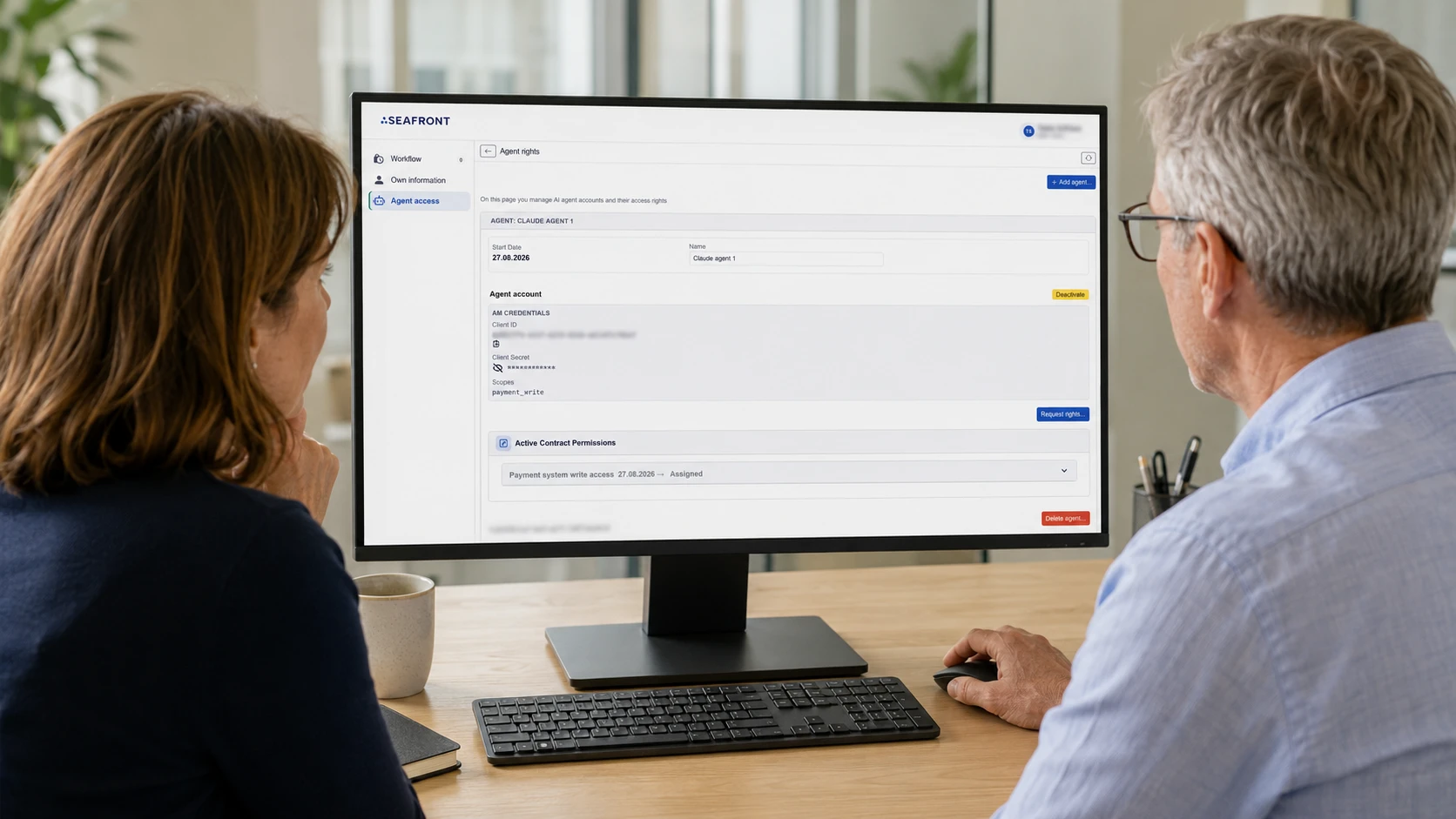
AI agents are beginning to do more than answer questions. They can create accounts, update customer data, generate reports and trigger business processes. To do this, they need access to applications and information. That creates a practical question: who decides what an AI agent is allowed to do?
Most organisations already have processes for managing employee access. A person joins the company, receives the access needed for their role, changes responsibilities and eventually leaves. AI agents need the same basic discipline, even though their lifecycle looks different. An agent may not have a job title or employment contract, but it should still have an owner, a defined purpose and a clear reason for every access right it receives.
Make the agent visible and accountable
One of the easiest mistakes is to treat an AI agent as a feature inside another application. If the agent uses shared credentials or acts through someone else’s account, it becomes difficult to see what it can access and who is responsible for it. The agent should instead be recognised as an identity of its own.
This does not mean pretending that an AI agent is an employee. It means recording enough context to govern it properly: what the agent is for, who owns it, which systems it may use and how long it should remain active. Without that context, access tends to accumulate. An agent may receive broad permissions during testing and keep them after it enters production, or its purpose may change while its access stays the same.
Before an agent receives access, someone should therefore be accountable for it. The owner does not need to approve every individual action, but they should make sure the agent has a legitimate purpose, suitable access and an appropriate level of oversight. Purpose matters because an onboarding agent, a reporting agent and a customer-service agent may all require very different permissions.
Govern access throughout the agent’s lifecycle
AI agents should use the organisation’s existing access-governance processes wherever possible. If an agent needs a new permission, the request should be evaluated against identity context and access policy. Where approval is required, it should be routed to the right person and the resulting decision should be recorded.
The agent should not bypass governance simply because the request begins with natural language or is initiated through an API. AI can make the interaction easier by interpreting a request, preparing a configuration or suggesting an action. The IGA platform should remain responsible for applying policies, approvals and access controls, with a person verifying the action when the level of risk requires it.
Creating the agent is only the beginning. Agents are updated, given new tasks, connected to additional systems and sometimes replaced entirely. Their access should change with them. If an agent’s purpose expands, its permissions should be reviewed before new access is granted. If ownership moves to another team, accountability should be updated. When the agent is no longer needed, its access should be removed and the identity archived.
This is where an IGA approach becomes valuable. Governance is not reduced to a one-time approval. The agent becomes part of a managed lifecycle.
Keep the decisions traceable
AI agents can perform actions much faster than people, which makes traceability more important. An organisation should be able to see who owns the agent, why it received access, which approvals were given and when its permissions changed. It should also be possible to distinguish between an action proposed by AI, an action approved by a person and a change applied by the platform.
IGA does not control everything an AI agent says or does, nor does it replace application security, AI safety or monitoring. Its role is more focused: governing the identity and the access behind the agent.
With Seafront IGA, organisations can bring employees, external users, AI agents and other non-human identities into the same governed platform. Each identity can be managed according to its own context without creating a separate access-management process for every new type of technology.
The goal is straightforward. Every AI agent should have a known owner, a clear purpose, appropriate access and a controlled end to its lifecycle. That is a much better starting point than discovering later that an agent has been operating with permissions nobody remembers granting.
How ready is your organisation?
AI agent governance does not have to begin with a large transformation programme. It can begin by identifying the agents already in use and asking whether their ownership, access and lifecycle are visible.
Assess your AI agent governance readiness
Explore the practical questions that help reveal where ownership, access controls and lifecycle governance still need attention.
Explore readiness tools