
Govern AI agents as managed identities
AI agents act inside your systems, so they need the same governance as people. Seafront gives every non-human identity an owner, a purpose, a managed lifecycle and access that can be reviewed and revoked.
An AI agent that can act needs an identity that can be governed
AI agents read data, call systems and make changes. When they do that through shared credentials, embedded keys or an administrator's own account, nobody can answer the same basic questions we ask about human access: who owns it, what it is allowed to do, why it has access and for how long.
As agents become more autonomous, this becomes an identity governance problem. Without a governed identity and lifecycle, access can outlive its purpose, permissions can become difficult to explain, and accountability becomes unclear.
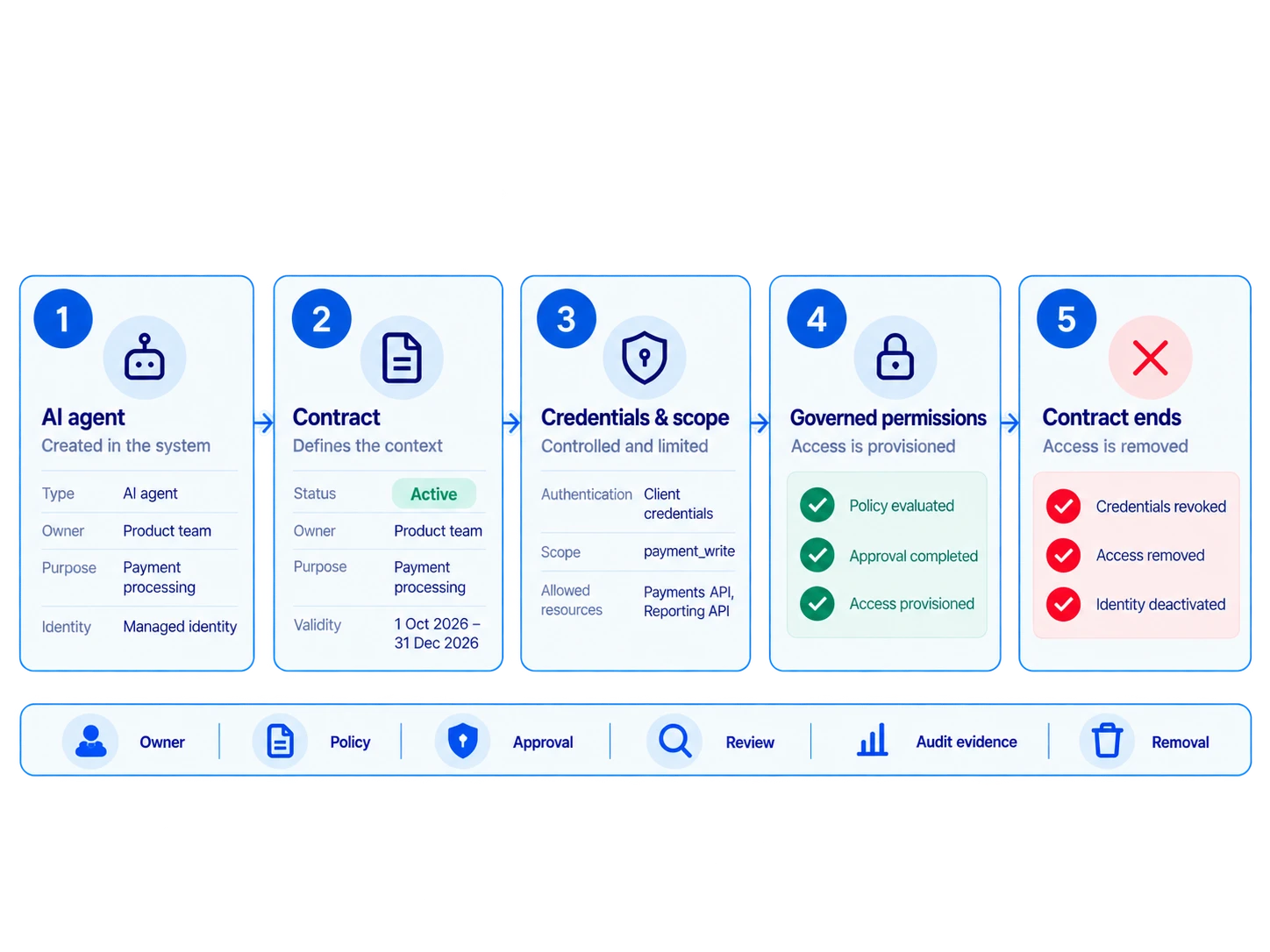
An AI agent gets an identity, a contract, governed access — and removal when it ends.
Seafront treats every AI agent as a governed identity with an accountable owner, defined purpose and managed lifecycle.
A contract provides the context for access, while credentials, scopes and permissions are governed through the same policies, approvals and lifecycle controls used for other identities.
Built into the platform
Human, external, machine and AI-agent identities are governed through the same control plane, with consistent policies, approvals and audit evidence — not a separate silo. An agent's history is therefore part of the normal record: which entitlements were requested, which policy applied, who approved, when the access was reviewed, and when it was removed.
Could you show who owns every agent acting in your systems?
Tell us how AI agents and service accounts are managed in your organisation, and we will show how Seafront governs them as identities with owners, purposes and controlled access.